

Investor's guide
Real estate investing for beginners: a Toronto primer
Cap rate, cash flow, BRRRR, house hacking. Investors talk in a language that can feel like a secret club. This primer translates it into plain English, one idea at a time, with tiny examples you can follow on a napkin.
By Spiro Vrysellas, Broker, Vrysellas Team, Elevate Realty Inc., Brokerage.
The ideas in this primer
Six ideas cover most of what beginners hear at the table. Tap any one to jump to it. Each gets a plain-English definition, a tiny example with round numbers and one line on why it matters to you.
- 1Cash flow
- 2NOI and cap rate
- 3The BRRRR method
- 4House hacking
- 5Defensive investing
- 6Rates and prices
- 7Example
- 8Starter checklist
First, how a rental property pays you
Before the jargon, the big picture. A rental can reward you in four different ways. Good investors know which ones they are counting on, and which ones are just a bonus.
The money left over each month after the rent comes in and every bill and the mortgage are paid.
Part of every mortgage payment reduces what you owe. Your tenants are helping you build ownership.
Over long periods, property values have tended to rise. It is never guaranteed, so treat it as a bonus, not the plan.
Renovating, adding a legal unit or fixing a tired property can make it worth more because of something you did.
Beginners often lean only on number 3 and hope. The ideas below help you build a property that works even when prices stand still.
Idea oneCash flow
In plain English: cash flow is what is left in your pocket each month after the rent comes in and everything goes out: property tax, insurance, repairs, any utilities you pay, and the mortgage.
Think of rent as water poured into a bucket. Every bill is a hole in the bottom. Cash flow is whatever is still in the bucket at the end of the month. Here is that bucket as a chart.
The cash flow waterfall
One month on a fictional two-unit house. Example only.
Rent $6,000, minus operating costs $1,500, minus mortgage $4,000 = $500 a month of cash flow, or $6,000 a year.
Watch out: the most common beginner mistake is forgetting the "holes" you do not see every month: a furnace that quits, a month between tenants, a leaky roof. Set aside a monthly amount for repairs and for vacancy, even if nothing is broken yet.
Idea twoNOI and cap rate
In plain English: NOI (net operating income) is a year of rent minus a year of operating costs, before the mortgage. The cap rate (capitalization rate) is NOI divided by the price, shown as a percentage. It tells you how much the property earns compared with what it costs, as if you paid all cash.
Why leave the mortgage out? Because every buyer finances differently. Taking it out lets you compare two properties fairly, like comparing the fuel economy of two cars without caring how each owner paid for theirs.
Example only: $40,000 ÷ $1,000,000 = 0.04, or 4.0%.
Property A earns $40,000 NOI on a $1,000,000 price: a 4.0% cap rate. Property B earns $45,000 NOI on the same price: 4.5%. All else being equal, B earns more for each dollar you pay.
Pro tip: a higher cap rate is not automatically better. It can mean more income, or it can mean more risk: an older building, a tougher location or rents that are hard to collect. Compare cap rates between similar properties in similar areas.
Idea threeThe BRRRR method
In plain English: BRRRR stands for Buy, Rehab, Rent, Refinance, Repeat. You buy a property that needs work, fix it up so it is worth more, rent it out, then borrow against the new higher value to pull some of your cash back out for the next one.
Buy a tired house for $1,000,000 with 20% down ($200,000), so the mortgage is $800,000. Spend $150,000 to renovate and add a legal basement unit. You have now put in $350,000 of your own cash.
Once it is rented, it appraises at $1,350,000. In this example the lender refinances up to 80% of the new value: $1,080,000. That pays off the $800,000 mortgage and hands back $280,000. Only $70,000 of your cash is still in the deal.
| BRRRR example | Amount |
|---|---|
| Down payment (20% of $1,000,000) | $200,000 |
| Renovation | $150,000 |
| Your cash in | $350,000 |
| New mortgage (80% of $1,350,000) | $1,080,000 |
| Minus the original mortgage | $800,000 |
| Cash back to you | $280,000 |
| Cash still in the deal | $70,000 |
Example only. Ignores closing costs, interest during the renovation and the cost of the refinance. Lender limits on refinancing change, so ask a trusted mortgage broker what applies to you.
Watch out: BRRRR only works if three numbers cooperate: the price you buy at, the renovation budget and the appraisal at the end. Renovations often run over, and the appraiser decides the value, not you. Also remember the new, bigger mortgage means a bigger monthly payment, so the rent still has to cover it.
Idea fourHouse hacking
In plain English: house hacking means you buy a home with more than one unit, live in one and rent out the other. Your tenant's rent pays part of your housing costs.
Say your monthly mortgage, property tax and insurance add up to $5,000. A tenant in your legal basement unit pays $2,000. You cover the other $3,000.
Total monthly cost $5,000, minus tenant rent $2,000 = $3,000 out of your pocket. The tenant covers 40% of the cost of the home you live in.
Pro tip: because you live in the home, financing for an owner-occupied two-unit house can be different from financing a pure rental, sometimes with a smaller down payment. Ask a trusted mortgage broker what your options are before you shop.
Watch out: a self-contained, legal unit with its own kitchen and bathroom is the clean way to do this. If you share a kitchen or bathroom with the person renting from you, different rules can apply. Check with the Landlord and Tenant Board or a lawyer before you set it up.
Idea fiveDefensive investing
In plain English: defensive investing means buying a property with enough cash flow cushion that a surprise, like a higher mortgage rate at renewal, does not push you into the red.
Your mortgage rate is not locked forever. A fixed rate is locked only for its term, and a variable rate can move along the way. When your term ends you renew at whatever rates are then. So a smart investor asks: "If my rate went up, would this property still pay for itself?"
The rate shock stress test
Two fictional properties, each with a mortgage of about $900,000. Hypothetical: the rate goes up by 1 percentage point, adding roughly $500 a month to the payment.
Hypothetical example only. The real change in your payment depends on your rate, mortgage size and amortization.
Property A: $800 cash flow minus a $500 payment increase = +$300, still positive. Property B: $100 minus $500 = -$400 a month, now coming out of your pocket.
How do investors build that cushion? More units under one roof, a larger down payment, rents that suit the neighbourhood, keeping operating costs in check and holding a cash reserve for the months when things go wrong.
Idea sixHow interest rates move house prices
In plain English: most people buy with a mortgage, and they shop by monthly payment. When rates fall, the same monthly payment borrows more money. When rates rise, it borrows less. That borrowing power is a big part of what pushes prices up or cools them down.
Same $4,000 monthly payment, different rate
Roughly how much that payment could borrow.
Hypothetical rates of 3% and 5%, with a 25-year amortization, for illustration only. These are not current rates.
Same buyer, same income, same budget, about $157,000 less buying power. Multiply that across every buyer in the city and you can see why rates matter so much.
Notice the word "tend". Rates are one force among many: jobs, population, how many homes are for sale and plain buyer confidence all play a part. Nobody can reliably time it.
A few more words you will hear
What the property is worth minus what you owe on it. It grows as you pay down the mortgage and as value rises.
Using borrowed money to buy more than your cash alone could. It magnifies gains and losses, both ways.
A professional's opinion of value that the lender relies on. Key to any refinance.
Time a unit sits empty between tenants. Budget for it even if you never expect it.
A unit built with permits that meets building, fire and zoning rules. Safer, easier to insure and finance.
The total time it would take to pay off the mortgage. A longer one means smaller payments and more interest.
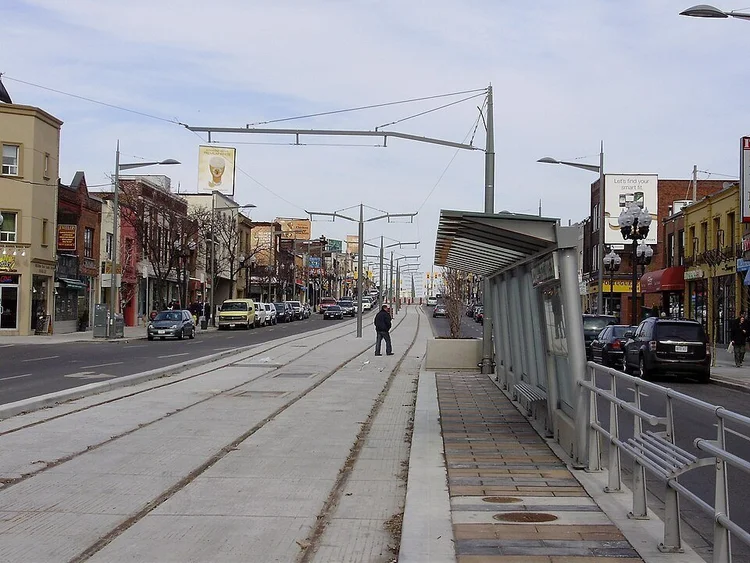
How Nadia house hacked a two-unit home near Corso Italia
A first investment that uses three ideas from this primer: house hacking, cash flow and the stress test.
- The plan: Nadia wanted to stop paying rent and start investing, but she did not want to own two properties. A two-unit house let her do both.
- The buy: a legal two-unit house near St. Clair West for $1,200,000 with 20% down. She lives on the main and upper floors and rents the legal basement unit for $2,200 a month.
- While she lives there: the tenant covers about 39% of her monthly costs, and part of every payment builds her equity.
- The stress test: she ran the numbers as if she moved out and rented both units. It came out about break-even. So she treats this as a home that helps pay for itself, not as a full rental yet, and keeps a cash reserve.
| Living there (monthly) | Amount |
|---|---|
| Mortgage payment on $960,000 (hypothetical rate, 30-year amortization) | about $4,840 |
| Property tax, insurance and repair reserve | $850 |
| Total monthly cost | $5,690 |
| Basement tenant's rent | -$2,200 |
| Nadia's share | $3,490 |
| If she moved out (monthly) | Amount |
|---|---|
| Rent from both units ($2,200 + $3,600) | $5,800 |
| Operating costs, including a $150 vacancy reserve | -$1,000 |
| NOI ($57,600 a year, a 4.8% cap rate) | $4,800 |
| Mortgage payment | -$4,840 |
| Cash flow | about -$40 |
Example only. Nadia is not a real client. The mortgage payment uses a hypothetical rate for illustration, not a current rate. Ignores closing costs. Your numbers will differ.
The lesson: the same house can be a great home-plus-investment and a thin full rental at the same time. Knowing which one you are buying is the whole game. Run your own version in our investment property calculator.
Where we focus
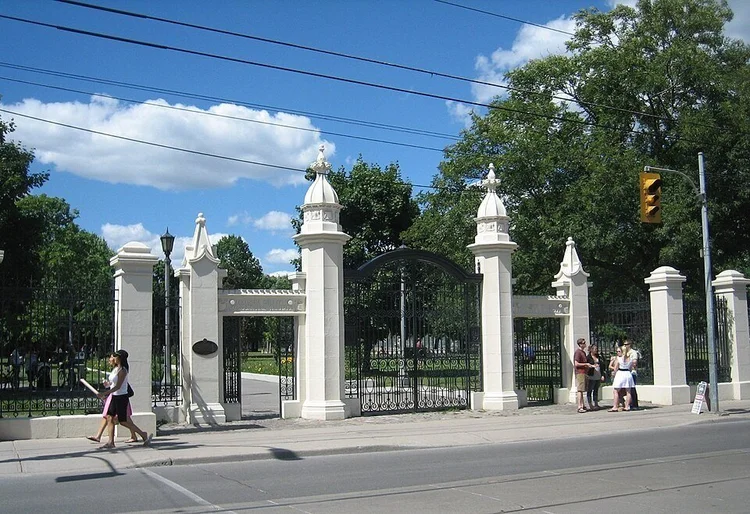
The Vrysellas Team specialises in income properties and multiplex conversions in Toronto's west end: Corso Italia, Trinity Bellwoods, Roncesvalles, Wychwood and Oakwood Village. We look at every property the way an investor should: the units, the layout, what is legal, what could be added and what the numbers really say.
Your starter investor checklist
Before you look at a single listing:
- Decide your goal: monthly cash flow, long-term growth or a home that helps pay for itself
- Talk to a trusted mortgage broker about down payment and financing for an investment or owner-occupied multi-unit
- Set aside a cash reserve for repairs and empty months, separate from your down payment
- Learn the six ideas above well enough to explain them to a friend
For every property you consider:
- Work out NOI and the cap rate, then compare with similar properties nearby
- Calculate monthly cash flow with realistic rents, repairs and vacancy included
- Stress test it: would it still work if your rate went up by a point or two?
- Confirm which units are legal, and what it would take to make or add one
- Picture who your tenant is and whether the location suits them: transit, schools, shops
Do the math the easy way: our free investment property calculator works out cash flow and cap rate for you, and the rest of our real estate calculators cover mortgages and closing costs.
Frequently asked questions
How much money do I need to start investing in Toronto real estate?
You need a down payment, closing costs such as land transfer tax and legal fees, and a cash reserve for repairs and vacancy. A pure rental usually needs a larger down payment than a home you will live in, while living in one unit of a multi-unit home can open up other options. A trusted mortgage broker can tell you exactly what applies to you.
What is a good cap rate?
There is no single magic number. Cap rates are best used to compare similar properties in similar areas. In high-demand neighbourhoods cap rates tend to be lower because buyers pay more for stability and long-term value. Always look at cap rate together with cash flow.
Does the BRRRR method work in Toronto?
The idea works anywhere, but it depends on buying well, keeping the renovation on budget and getting a strong appraisal. With Toronto prices you may leave more of your cash in the deal than in cheaper markets, so plan for that and treat any cash you get back as a bonus.
Is house hacking a good first investment?
For many people, yes. You live in one unit and rent the other, so a tenant helps pay your costs while you learn to be a landlord. Financing can also be different when you live in the home. The key is a self-contained, legal unit and numbers that work for you.
Should I wait for interest rates to drop before I invest?
Nobody can reliably predict rates. Lower rates can also bring more competition and higher prices. A better approach is to buy a property whose numbers still work with a cushion if rates rise, then any drop in rates is a bonus.
Keep learning
Run the numbers on an investment property All free real estate calculators Corso Italia neighbourhood guide Trinity Bellwoods neighbourhood guideExample figures are for illustration only. Interest rates shown are hypothetical and are not current rates. Lender, tax and government rules change, so confirm details with your mortgage broker, accountant and lawyer. This is not financial or legal advice.