

Buyer's guide
How to buy a home in Toronto: your step-by-step game plan
Buying your first (or next) home feels huge because nobody shows you the playbook. Here it is: twelve clear steps, what happens at each one and how to show up ready, so when the right home comes along you can act with confidence.
By Spiro Vrysellas, Broker, Vrysellas Team, Elevate Realty Inc., Brokerage.
The whole journey at a glance
Tap any step to jump to it. Having a plan cuts out the stress and time pressure of going in blind. When your search is targeted, you save time and money, and you make decisions you are more than happy with.
- 1Get pre-approved
- 2Build your strategy
- 3Ready your 5% deposit
- 4Study a sample offer
- 5Run the funnel
- 6Tour the best homes
- 7Submit your offer
- 8Home inspection
- 9Price any renovations
- 10Finance condition
- 11Waive and go firm
- 12Get the keys
Why a plan wins
- Endless weekends of open houses
- Unsure what you can really afford
- Scrambling for a deposit on offer night
- Fear of missing the right home
- Second-guessing every decision
- Only tour homes worth your time
- A budget you are comfortable with
- Deposit ready, so you can act fast
- You see every good option that comes up
- Decisions you feel great about
The buyers who win are the ones who did steps 1 to 4 before they found the house. When the right home comes along, they are ready to move, while everyone else is still getting organized.
Step oneGet pre-approved with a good mortgage broker
A pre-approval is a lender looking at your income, debts, credit and savings and telling you, in writing, roughly how much they would lend you. It can also hold an interest rate for you for a few months, so if rates go up while you shop, you are protected.
We suggest a mortgage broker rather than walking into one bank. A broker compares many lenders at once, which often means a better rate and more flexibility if your situation is not perfectly simple (self-employed, new job, bonus income).
The stress test, in plain English
Lenders have to check that you could still afford your payments if rates rose. So they qualify you at a higher rate than the one you will actually pay. That is why your pre-approval can feel lower than you expected. Better to know now than on offer night.
Pro tip: the maximum you are approved for is not your budget. Your budget is the payment you can live with comfortably. Run both numbers in our free mortgage calculator.
Have these ready for the broker:
- Photo ID and your current address history
- A recent job letter and your last two pay stubs (self-employed: two years of tax returns and notices of assessment)
- 90 days of statements showing your down payment savings
- A list of debts: car loans, lines of credit, student loans, credit cards
Step twoSit down for a buyer consultation

This is where your search stops being "scrolling listings" and becomes a plan. In about an hour we turn your goals into a personal buying strategy you can actually follow.
Your comfortable budget, must-haves versus nice-to-haves, the neighbourhoods that fit, your timeline and your long-term plan, like renting out a basement or growing into the space.
A clear target: price range, home types, streets to watch and exactly how we will compete when the right home appears.
Pro tip: bring your partner and anyone helping with the down payment. Getting everyone aligned early saves a lot of stress on offer day.
Step threeHave your 5% deposit ready
When your offer is accepted, you pay a deposit, usually within 24 hours. In Toronto that is commonly about 5% of the price. It is held in trust by the seller's brokerage until closing and then counts toward your down payment. If the money is tied up in investments or waiting on a transfer, you could miss the home, so have it ready to send by bank draft or wire before you start touring.
Paid right after your offer is accepted. Shows the seller you are serious. Usually about 5%.
Your full share of the price, paid on closing day. The deposit is part of it, not extra.
How it adds up with 20% down
In this guide we assume a 20% down payment. Your 5% deposit is simply the first part of it. Here is a $1,145,000 home:
Total down payment: $229,000 (20%). With 20% or more down, you avoid mortgage default insurance, which keeps your mortgage smaller.
Putting down less than 20%? Other options are available, including smaller down payments and first-time buyer savings programs. Talk to a trusted mortgage broker to see what fits you.
Step fourStudy a sample offer before you need one
The worst time to read your first offer is at 9 p.m. on offer night. We walk you through a real example ahead of time so the document feels familiar. These are the parts that matter most:
What you will pay and how much you send on acceptance.
The day the home becomes yours. Often 30 to 90 days out.
Your safety nets, such as financing and inspection, with a deadline to remove them.
What stays with the home: appliances, light fixtures, window coverings.
Pro tip: decide your walk-away price before you see the competition. It is much easier to stay disciplined when the number was set with a clear head.
Step fiveRun the funnel
Instead of chasing whatever pops up, we take every home that comes up in your target area and filter it down, step by step, until only the best handful are left. You spend your weekends seeing homes that are actually worth it.
Example only.
Our review covers the things photos hide: the price history, the lot, the zoning, nearby sales and anything in the listing that needs a closer look.
Step sixTour the best homes in person
Now you visit the shortlist with Spiro or another member of the team. Photos sell the dream; a visit tells you how a home actually feels: the light, the noise, the smells, the neighbours' yards. We point out what to look past and what to look into.
Bring this checklist:
- Water stains on ceilings, under sinks and in the basement
- Age of the roof, furnace, air conditioner and windows
- The electrical panel and any knob-and-tube wiring
- Street noise, parking and transit at the times you would use them
Walk the outside. The ground should slope away from the house so rain drains away from the foundation. Watch for low spots, pooling water and downspouts that empty right beside the walls.
Think beyond today. Is there room for a basement suite, a laneway or garden suite, an addition or more units? We look at the lot, the zoning and what has been done nearby.
Step sevenSubmit your offer
Found the one? There are two common ways it goes in Toronto:
The seller picks a date and reviews all offers at once. Buyers usually get one shot, so your price and terms need to be your best from the start.
You make an offer, the seller can accept, reject or counter, and you go back and forth until you agree or walk away.
A strong offer is not only about price. A solid deposit, a closing date that suits the seller and as few conditions as you can safely accept all make your offer stand out.
Step eightHome inspection (when it makes sense)
A home inspection is a two-to-three hour visual check of the home by a trained inspector. They look at the roof, structure, foundation, plumbing, electrical, heating and cooling, insulation and signs of water, then give you a written report, usually with photos. It typically costs a few hundred dollars and is worth every cent.
You can make the offer conditional on an inspection, usually for a few days. If the report shows a big problem, you can renegotiate or walk away.
Conditions make your offer weaker, so buyers often inspect before the offer date, or review the seller's pre-listing inspection.
Pro tip: go to the inspection. Walking through it with the inspector teaches you more about the house than the report ever will.
Step nineEstimate any renovations
Planning to update the kitchen, add a basement suite or fix what the inspection found? Know the rough cost before you commit, not after. Spiro and the team help you scope the work and get realistic numbers from trades we trust, so the renovation fits your budget along with the purchase.
Watch out: adding a unit or moving walls can need permits. Check what is allowed on that lot before you price it into your offer.
Step tenThe finance condition
Your pre-approval was based on you. Now the lender needs to approve this specific home. A finance condition, usually a few business days, gives them time to do that. Here is what they will ask for:
- The signed agreement of purchase and sale and the listing
- Updated proof of income and your down payment
- An appraisal, to confirm the home is worth what you are paying
Step elevenWaive your conditions and go firm
Once financing is approved and you are happy with the inspection, you sign a short form called a waiver. That removes your conditions and the deal becomes firm. From this moment you are committed to buying, so only sign once everything checks out. Then your real estate lawyer takes over the paperwork, title search and funds.
Step twelveGet the keys and move in
A few days before closing, you meet your lawyer to sign, and send the rest of your down payment and closing costs. On closing day the lender sends the mortgage funds, the lawyer registers the home in your name and releases the keys, usually in the afternoon. Then you get to walk in, look around and smile, because it is yours.
Not sure what closing will cost? Our cash to close guide breaks down land transfer tax, rebates and every other cost.
Bonus step: share the love
If we did our job right, you are standing in your new home grinning. Leave Spiro a 5-star review and send him two friends who need a plan of their own.
Totally optional. Totally appreciated.
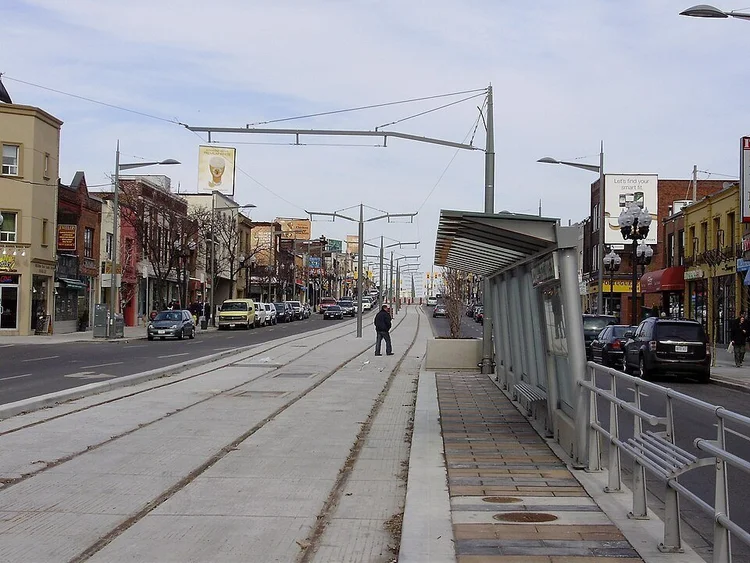
How Maya and Daniel bought a semi near Corso Italia
An example of a first-time purchase, built with realistic Toronto numbers.
- Week 1: Pre-approved through a mortgage broker, with their rate held. Buyer consultation with Spiro: target semis near St. Clair West, $1.1M to $1.2M, with room to finish the basement later.
- Week 2: Moved their deposit money into their chequing account so it was ready to send. Reviewed a sample offer together.
- Week 3: The funnel took 64 listings down to 4 tours. They loved the third one. It had an offer date and was listed at $1,099,000.
- Offer night: They inspected before the offer date and came in firm at $1,145,000, about 104% of asking, with a 60-day closing that suited the sellers. Accepted.
- Day 1: Sent the $57,250 deposit (5%) by bank draft.
- Day 60: Signed with their lawyer, got the keys and ordered pizza on the living room floor.
| Their numbers | Amount |
|---|---|
| Purchase price | $1,145,000 |
| Deposit on acceptance (part of the down payment) | $57,250 |
| Down payment (10%) | $114,500 |
| Ontario land transfer tax after first-time rebate | $15,375 |
| Toronto land transfer tax after first-time rebate | $14,900 |
| Sales tax on mortgage insurance (paid on closing) | about $2,720 |
| Legal fees, title insurance and adjustments | about $3,000 |
| Cash needed in total | about $150,500 |
Example only. Maya and Daniel are not real clients. With 10% down, mortgage default insurance is added to the mortgage, and in Ontario the sales tax on it is paid on closing. Your numbers will differ.
How fast it can happen
With a plan, from first call to a firm deal
Then you move in on the closing date you choose.
Why it is faster: a detailed buyer consultation and the funnel system save you countless days, even months, of mindless searching that gets you nowhere. And because you see every good home that comes up in your area, there is no fear of missing out. The system works.
Frequently asked questions
How much do I need saved to buy a home in Toronto?
Your down payment plus closing costs. With 20% down on a $1,145,000 home, that is $229,000, plus land transfer tax, legal fees and other closing costs. Options with less than 20% down are available, so talk to a trusted mortgage broker.
Is the deposit extra money on top of my down payment?
No. The deposit is part of your down payment. You just pay that part earlier, usually within 24 hours of your offer being accepted.
Should I skip the home inspection to win?
Not without inspecting another way. On offer dates, buyers usually inspect before the offer date or review the seller's inspection, so they can offer without the condition and still know what they are buying.
What happens if my financing falls through after I go firm?
You can lose your deposit and be responsible for the seller's losses. That is why you only waive the finance condition once your lender has fully approved the mortgage on that home.
How long does it take to buy a home?
With a clear plan, many buyers go from the first call to a firm deal in about one to two months. Then you move in on the closing date you choose. A focused search is what makes the difference.
Keep learning
How much mortgage can I qualify for? How much cash do I need to close? All Toronto real estate guidesExample figures are for illustration only. Lender and government rules change, so confirm details with your mortgage broker and lawyer. This is not financial or legal advice.