

Landlord's guide
Buying your first rental property in Toronto (and being a good landlord)
Owning a rental is two jobs: buying the right property, then running it well. This guide walks you through both, from picking a layout tenants love to the Ontario rules every landlord has to follow, so your first rental is a good experience for you and your tenants.
By Spiro Vrysellas, Broker, Vrysellas Team, Elevate Realty Inc., Brokerage.
Your roadmap
Tap any step to jump to it. Steps 1 to 4 are about buying well. Steps 5 to 8 are about being the kind of landlord good tenants want to stay with.
- 1Choose the property
- 2Legal vs non-legal units
- 3Run the numbers
- 4Finance the rental
- 5Ontario landlord basics
- 6Find and screen tenants
- 7Insurance, repairs, records
- 8Self-manage or hire help
Accidental landlord vs prepared landlord
- Buys whatever "has a basement apartment"
- Guesses at rent and forgets repairs
- Writes their own lease from a template online
- Picks the tenant who seems nice
- Finds out the rules at the Landlord and Tenant Board
- Buys a layout tenants actually want
- Knows the numbers before making an offer
- Uses the Ontario Standard Form of Lease
- Screens every applicant the same fair way
- Knows the rules before the first showing
Step oneChoose a property tenants will love
A great rental is not always the prettiest house on the street. It is the one that is easy to rent, easy to maintain and easy to live in. Look at it through your future tenant's eyes.
Bedrooms of a decent size, a real living space, good light, in-suite or shared laundry and enough storage. In a basement unit, ceiling height and window size make a big difference.
Each unit with its own door gives tenants privacy and makes showings, repairs and day-to-day life much easier for everyone.
Close to transit, schools, groceries, parks and big employers. A short walk to the subway or a streetcar line is one of the most rentable features in Toronto.
A newer roof, furnace and plumbing mean fewer emergency calls. Separate meters or controls per unit can also make utilities simpler.
We see strong rental demand around neighbourhoods like Corso Italia and Trinity Bellwoods, plus Roncesvalles, Oakwood Village and pockets of East York near the subway. The best street for you depends on your budget and who you want to rent to.
Pro tip: before you buy, look at what similar units nearby are listed for and how quickly they rent. That tells you more about real demand than any brochure.
Step twoLegal units vs non-legal units, and why it matters
A legal unit is one that was built or converted with the proper permits and meets the building code, fire code and zoning rules. A non-legal unit is one that was created without that approval. Listings often say "basement apartment" either way, so never assume.
- Safety unknowns: fire separation, exits, wiring
- Insurance may not cover a claim tied to it
- Lenders may not count its rent
- Could be ordered to fix or close it
- Tenants still have their full rights
- Built to fire and safety standards
- Easier to insure properly
- Rent more likely to count for financing
- Stronger appeal when you sell
- You sleep better at night
That last point on the left surprises people: a tenant living in a unit that is not legal is still protected by Ontario's tenancy rules. So a non-legal unit gives you the risks of being a landlord without the protection of a properly approved home.
Watch out: ask for proof, such as permits and final inspections, before you rely on a unit being legal. If you plan to legalize one, get advice from the City of Toronto and qualified professionals on what it will take before you price it into your offer.
Step threeRun the numbers before you fall in love
A rental is a small business. Before you make an offer, write down every dollar that comes in and every dollar that goes out each month. These are the lines most first-time landlords need:
- Realistic rent for each unit, based on similar rentals nearby
- Property tax, landlord insurance and any utilities you will pay
- A monthly repair and maintenance reserve, even if the house is in great shape
- A vacancy reserve for the time between tenants
- Your mortgage payment, plus what it might be if rates rise at renewal
Do it in minutes: plug any property into our free investment property calculator to see cash flow and cap rate, then check closing costs with the other real estate calculators.
If the property only works when everything goes perfectly, it does not work. Look for a cushion, and keep a separate cash reserve for the surprise repair that always comes eventually.
Step fourFinance the rental
Financing a rental is not quite the same as financing a home you live in. Three things to know:
A pure rental, where you will not live in the property, usually needs a larger down payment than a home you live in, and many investors put down more than the minimum so the rent can cover the costs.
Lenders may count some or all of the expected rent when they work out how much you can borrow. How much they count varies by lender and property.
If you live in one unit and rent the other, different financing options may be available, sometimes with a smaller down payment.
A trusted mortgage broker compares lenders and tells you exactly what applies to your situation before you shop.
Here is how a 30% down payment splits on the example home further down this guide:
Example only, on a $1,150,000 purchase. Your down payment depends on your lender and your situation.
Step fiveOntario landlord basics
Being a landlord in Ontario comes with clear rules, and they exist to protect both you and your tenant. Here is the lay of the land in plain English. The details change from time to time, so always confirm current rules with the Landlord and Tenant Board, the Government of Ontario or a lawyer.
The main law for most residential rentals in Ontario. It sets out what landlords and tenants can and cannot do.
Most residential tenancies must use Ontario's Standard Form of Lease. You can add extra terms, but they cannot take away a tenant's rights.
The LTB resolves disputes between landlords and tenants, including unpaid rent and evictions. Only the LTB can order an eviction.
Many units can only go up by an annual guideline set by the province, with proper written notice. Some newer units are exempt from the guideline. Check the current rules before any increase.
You can collect a rent deposit, commonly last month's rent, and interest rules apply to it. Damage deposits are not allowed in Ontario.
Raising rent, entering the unit and ending a tenancy all require proper notice, often on official forms. Get the timing and paperwork right, or it may not count.
Outside emergencies, landlords generally must give written notice before entering, and only for reasons the law allows. The unit is the tenant's home.
You must keep the property in good repair and meet health, safety and maintenance standards, whatever the lease says. Never cut off heat, water or power.
Watch out: never change the locks, remove belongings or cut services to push a tenant out. It is illegal and can lead to serious penalties. If there is a problem, the proper path is through the Landlord and Tenant Board.
Step sixFind and screen tenants, fairly and legally
The tenant you choose matters more than almost anything else. A great tenant makes owning a rental easy. The way to find one is a clear, consistent process that you use for everyone.
Example only.
A fair screening process usually includes:
- A written application from every adult who will live there
- A credit check, with the applicant's written consent
- Income and employment verification
- References from current and past landlords
- The same written criteria applied to every applicant, in the same order
Ontario's Human Rights Code applies to renting. You cannot refuse or treat someone differently because of grounds like race, ancestry, place of origin, colour, ethnic origin, citizenship, creed, sex, sexual orientation, gender identity, gender expression, age, marital status, family status (including having children), disability or receiving public assistance.
Pro tip: write your criteria down before you post the listing, and keep notes on each applicant. It keeps your choice fair, helps you compare people on facts, not first impressions, and protects you if a decision is ever questioned.
Step sevenInsurance, repairs and records
Insurance
A regular home policy is usually not enough once you rent the property out. You need a landlord or rental property policy, and you should tell your insurer about every unit. It is also common to ask tenants to carry their own tenant insurance for their belongings and liability. Ask your insurance broker and lawyer how to set that up.
Maintenance and repairs
Fix things promptly and keep a list of trades you trust: a plumber, an electrician, a heating technician and a handyperson. Make sure working smoke alarms and carbon monoxide alarms are installed where required, and test them. Fast, friendly repairs are the number one reason good tenants stay.
Record keeping and taxes
Rental income is taxable, and many rental expenses can be deducted. Keep every lease, receipt, invoice and rent record in one place, and track income and expenses by month. Some choices, like claiming depreciation, have trade-offs down the road, so talk to an accountant who works with landlords before you file.
Pro tip: open a separate bank account just for the rental. Rent goes in, expenses come out. At tax time your accountant will thank you.
Your landlord year at a glance
- Move-in daySigned Standard Form of Lease, a walk-through with dated photos of every room, alarms tested, keys handed over and a receipt for the rent deposit.
- Every monthRent recorded, receipts saved, repair requests answered quickly and a quick check-in with your tenants when it makes sense.
- SpringWalk the outside: roof, gutters, downspouts and grading. Service the air conditioning before the first heat wave.
- FallService the furnace, test smoke and carbon monoxide alarms, seal drafts and confirm who handles snow and ice, as set out in the lease.
- Tax timeHand your accountant a clean summary of rent and expenses. Check any City of Toronto property declarations that apply to you.
- Lease anniversaryReview the rent. If an increase is allowed, give proper written notice well in advance. Deal with the interest owed on the rent deposit and review your insurance.
Step eightSelf-manage or hire a property manager?
There is no right answer, only the right fit for your time, temperament and distance from the property.
- Pros
- Keep the full rent, no management fee
- You pick the tenant and know the property
- You learn the business fast
- Cons
- Calls can come at any hour
- You must keep up with the rules
- Pros
- Screening, rent and repairs handled for you
- Experience with forms and processes
- Works well if you live far away
- Cons
- A fee comes off your cash flow every month
- Quality varies, so choose carefully
Many first-time landlords self-manage a nearby two-unit property, then bring in help as they grow. Whichever you pick, you are still the landlord and still responsible.
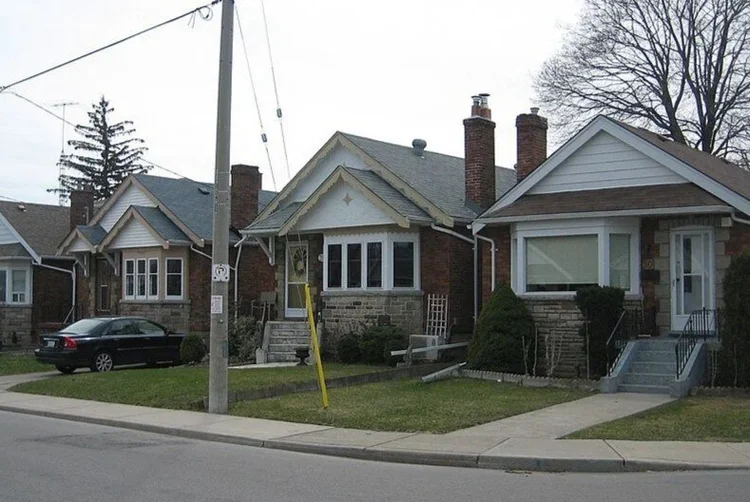
Leah and Omar's first rental: a legal two-unit bungalow in East York
A pure rental, bought with realistic Toronto numbers and run by the owners themselves.
- The search: a bungalow with a legal, permitted basement unit and separate entrances, a short walk to the subway.
- The financing: they put 30% down on a $1,150,000 purchase so the rent could carry the property, after their mortgage broker confirmed the rent would help them qualify.
- The tenants: they listed both units, used one written set of criteria for everyone and signed the Standard Form of Lease with each household.
- The result: modest monthly cash flow, while the tenants' rent pays down about $1,070 of mortgage principal in the first month alone.
| Their monthly numbers | Amount |
|---|---|
| Rent, main floor (3 bedrooms) | $3,150 |
| Rent, lower unit (2 bedrooms) | $2,250 |
| Total rent in | $5,400 |
| Property tax | -$400 |
| Landlord insurance | -$220 |
| Water and garbage (owner pays) | -$100 |
| Repair and maintenance reserve (5% of rent) | -$270 |
| Vacancy reserve (about 3% of rent) | -$160 |
| Net operating income | $4,250 |
| Mortgage payment on $805,000 (hypothetical rate, 30-year amortization) | -$4,059 |
| Monthly cash flow, self-managed | $191 |
| If they hired a manager at 8% of rent ($432) | -$241 |
Example only. Leah and Omar are not real clients. The mortgage payment uses a hypothetical rate for illustration, not a current rate. The management fee is an example only. Ignores closing costs and income tax. Your numbers will differ.
Two lessons hide in that table. First, the cushion is thin, so their cash reserve matters. Second, the choice to self-manage is the difference between positive and negative cash flow. Run your own numbers before you decide.
Your first rental checklist
Before you buy:
- Talk to a trusted mortgage broker about down payment and how rent is counted
- Confirm which units are legal, with permits to back it up
- Check the rent for similar units nearby and how fast they rent
- Run the numbers with repair, vacancy and a rate-rise cushion built in
- Set aside a separate cash reserve for surprises
Before your first tenant moves in:
- Read the Landlord and Tenant Board's guidance for landlords
- Get a landlord insurance policy in place
- Write your screening criteria and use them for every applicant
- Prepare the Ontario Standard Form of Lease
- Test smoke and carbon monoxide alarms and photograph every room
Frequently asked questions
Do I have to use the Ontario Standard Form of Lease?
For most residential tenancies in Ontario, yes. Some types of housing are exempt, so if you are unsure whether it applies to your situation, check the Government of Ontario's guidance or ask a lawyer.
Can I ask my tenant for a damage deposit?
No. Damage deposits are not allowed in Ontario. You can collect a rent deposit, commonly last month's rent, and interest rules apply to it. Check the current rules with the Landlord and Tenant Board before you collect anything.
How much can I raise the rent each year?
For many units, increases are limited by an annual guideline set by the province, and you must give proper written notice in advance. Some newer units are exempt from the guideline. Rules and the guideline change, so check the current rules with the Landlord and Tenant Board or a lawyer before any increase.
Is it OK to rent out a basement unit that is not legal?
It is risky. Safety standards may not be met, your insurance may not cover a related claim and lenders may not count the rent. Tenants in a non-legal unit still have their rights. If you want to legalize a unit, get advice from the City of Toronto and qualified professionals.
Should I hire a property manager for my first rental?
It depends on your time, how close you live and how hands-on you want to be. A manager takes a lot off your plate, but the fee reduces your cash flow. Many first-time landlords self-manage a nearby property and bring in help as they grow.
Will the rental income help me qualify for a mortgage?
Often, yes. Many lenders count some or all of the expected rent when working out how much you can borrow, but how much varies by lender and property. A trusted mortgage broker can tell you what applies to you.
Keep learning
Run the numbers on a rental property How much mortgage can I qualify for? East York neighbourhood guide All free real estate calculatorsExample figures are for illustration only. Interest rates shown are hypothetical and are not current rates. Landlord and tenant rules, lender rules and tax rules change, so confirm current details with the Landlord and Tenant Board, the Government of Ontario, a lawyer, your accountant and your mortgage broker. This is not financial or legal advice.